
Friendship is a significant source of happiness and fulfillment, at least in my life. And today, I’m fortunate to have several close friends with whom I truly connect—and are there when I need them. However, I’ve also seen and experienced the toxic side of friendship, learning firsthand how damaging it can be to your self-esteem and self-worth when you invest too much time in people who may seem like friends but don’t genuinely care about you.
In this blog, I want to explore what true friendship means, and when it’s time to let go of relationships that no longer serve you. Because I still see many people clinging to such friendships. While it so much better to instead, embrace new opportunities and adventures than to hold on to toxic relationships out of fear of loneliness, convenience, or simply the comfort of familiarity.
What type of friends
Firstly, let’s assess the type of friendships we can have in our life, I roughly see 3 type of friends;
• Best Friends (1-2 people): These are the closest individuals in your life, the ones you share your deepest secrets with. They’re the first people you call when you need support or want to celebrate a milestone.
• Good Friends (3-5 people): They’re not the first people you reach out to in times of trouble, but they would be there for you if you needed them. You may not see them often, but when you do, it feels like no time has passed.
• Casual Friends (5+ people): These are acquaintances or friends you see occasionally, typically at social events. You enjoy their company when you meet, but you don’t maintain regular contact.

Not every friendship is however the same, with every friend you have a slightly different relationships, which is largely determined by three elements of friendship:
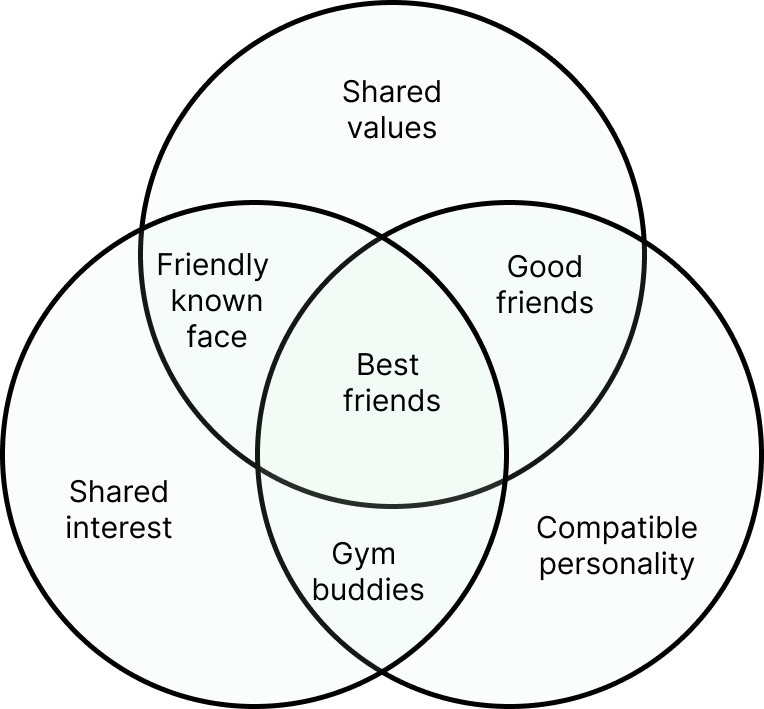
• Shared Values: Do you and your friends share similar beliefs and principles? Are you aligned on core values such as honesty, kindness, and respect?
• Shared Interests: Friendships often develop through common interests or activities. Do you have hobbies or passions that you enjoy together?
• Compatible Personalities: Personalities matter. Some personalities naturally fit together, while others clash. Understanding your compatibility helps explain why some people become close friends and others remain acquaintances.
Not every friendships needs to meet all of these criteria. For example, shared values and personalities might create a meaningful friendship, even if you don’t have many common interests. And it’s also ok to “just be gym buddies with someone. However, having all three elements—shared values, interests, and personality compatibility—creates a strong foundation for deep friendship- i.e. being best friends.
How to assess the quality of friendship
The quality friendship, for me at least, is ultimately determined by two key factors:
• Enjoyability: How much joy does this friendship bring you? Is it easy and comforting, or does it feel awkward or forced?
• Healthiness: Is the relationship balanced and built on trust? Do you wish each other well, or is there jealousy and competition? Do you feel respected and valued by this person?

Which leads us to 4 categories of friends:
- Not fun and unhealthy: These friendships drain your energy. They’re not enjoyable, and the relationship lacks trust and respect.
Meet Megan: Megan constantly brings drama and negativity into your life. Every interaction feels draining, and she rarely offers emotional support or positivity. Instead, she’s focused on her own problems, often leaving you feeling stressed or upset after hanging out. Over time, you realize this friendship is unhealthy, and you question why you’re still maintaining it, knowing it’s doing more harm than good. - Fun but unhealthy: These are the friendships you might have enjoyed during certain phases of your life, like drinking buddies or party friends. While you might have a great time together, they may not be reliable or supportive in the long term.
Meet Lisa: Lisa is the friend you call when you want to have fun and escape the daily grind. She’s always ready for an adventure, and hanging out with her is exhilarating. However, when things get tough, Lisa often disappears. The friendship is built on having fun, but it doesn’t go much deeper. You enjoy her company but don’t turn to her for serious support or advice. - Healthy but not fun: These are friendships that might have been fulfilling once, but now feel like an obligation. Perhaps you’re still in touch with your high school friends, but you no longer have much in common.
Meet David: David is the person you rely on when you need advice or help with serious issues. He’s steady and trustworthy, but you don’t have a lot of fun together. While you value his support, you may sometimes feel the friendship is a bit too focused on responsibility and lacks excitement. You keep the relationship because it’s rooted in mutual respect and care, even if it’s not always the most fun. - Fun and healthy: This is the ideal friendship category. These are the people you love spending time with and who also respect and support you. You never have to second-guess where you stand with them—they’re clear, open, and honest. They show up for you when it matters most, and you share mutual trust and admiration.
Meet John: John is the kind of friend you can rely on for anything. Whether you’re planning a fun weekend trip or need emotional support, he’s there. You always feel energized and respected after spending time with him, and he’s the first person you’d call in both good times and bad. He adds value to your life and truly wants the best for you.
What theory says about assessing your friendships based on health and fun
One emotionally focussed explenation for this model, is offered by Sternberg’s Triangular Theory of Love. Which was originally developed for romantic relationships, Sternberg’s Triangular Theory of Love identifies three key components for relationships: Intimacy (Reflecting emotional closeness, trust, and mutual support, similar to relationship health), passion (Reflecting excitement, fun, and energy in the relationship, similar to the fun axis) and commitment (reflecting the long-term investment in the relationship). Results of different studies based on this theory (Acker and Davis (1992); Lemieux and Hale (2000)) showed that couples with higher levels of intimacy, passion, and commitment tended to report higher levels of relationship satisfaction.
A more economic focussed explanation for the above friendship model is offered by the Social Exchange Theory (Link to Wikipedia). The social Exchange Theory posits that relationships are based on a cost-benefit analysis where individuals evaluate their friendships by weighing the benefits (fun, emotional support) against the costs (stress, lack of reciprocity, emotional drain).According to this theory, a friendship is seen as valuable if the benefits (fun and emotional support) outweigh the costs (stress, drama, imbalance). The two-axis model aligns with this framework, since it suggests that good friendships balance both emotional health and enjoyment.
So now what to do
It might be obviously, but you of course want to have more of the good friendship and less of the bad friendship, which translates in the below advice per category:
- Not fun and unhealthy friendships: Why you’re still holding onto these connections. The longer you stay, the more they might negatively influence you. Letting go of these friendships can be liberating.
- Fun but unhealthy friendships: It’s fine to enjoy these friendships for what they are, but don’t hold onto them too long if they aren’t helping you grow.
- Healthy but not fun friendships: . While it’s okay to maintain these relationships, life is too short to spend time on friendships that don’t bring joy. It’s okay to let go and make space for new, more fulfilling connections.
- Fun and healthy friendships: These are the friendships worth investing in, as they will greatly enrich your life
Hence, some advice how to let go of bad friends and how to strengthen relationships with people that are worth your efforts:
Letting Go of Bad Friends
1. Evaluate the Relationship: Reflect on whether the friendship is positioned in the quadrant. Consider how often the friend contributes to your happiness versus how often they cause stress or negativity.
2. Set Boundaries: Gradually reduce contact by setting boundaries. You don’t need to make a dramatic exit; just start by declining invitations or limiting your availability. This helps create space without unnecessary conflict.
3. Be Honest (if needed): If the friendship requires a more direct approach, calmly explain your feelings. Focus on how the relationship affects you rather than blaming the other person. For example, “I feel like this friendship isn’t as positive for me as it used to be.”
4. Detach Emotionally: As you create distance, let go of any guilt or attachment. Remind yourself that it’s okay to prioritize your own mental health. It’s normal for friendships to evolve, and sometimes letting go is the healthiest choice.
Strengthening Relationships with Good Friends
1. Be Intentional: Make time for meaningful interactions. Plan activities that deepen the connection, like dinners, celebrations, shared hobbies. Quality time nurtures deeper bonds.
2. Express Gratitude: Regularly let your good friends know you appreciate them. Spelling out that someone is a good friend, can strengthen trust and reinforce the value you place on the friendship.
3. Communicate Openly: Keep communication honest and transparent. Don’t hesitate to talk about your feelings, whether they’re about something positive or a challenge in the friendship. Open dialogue builds trust.
4. Invest in Their Well-being: Show that you care by supporting your friends’ goals and interests. Offer help when they need it and celebrate their achievements, independent of the situation you are in.
Ultimately it comes down to having standards for yourself in terms of friendship. You get what you accept.
The harsh truth of life, is that If you accept that certain people treat you badly, a lot of people will actually threat you badly. So it’s up to you to have borders, and define what level of friendship you expect. Having such standards will it actually make it easier for good friends, to act as good friends (because you can more clearly express who you are), and will allow bad friends to show their true self (to which you should have said goodbye, probably a long time ago).
And yes, letting go of people is sometimes a complex and scary proces, but the upside is to big to not do it- it’s your own happiness and growth at stake:-)
Your experience
So how does the above fit with your experience?
- How weak or strong are your friendships?
- In which circle and quadrant do all your friend fit?
- Do you have a friend that fits right in the middle of you best friend circle? Do they know?
- Do you have friendships that have become unhealthy over time? Is it time to let go?
- Which steps have you taken recently to either let go of the bad friendships- and/or to strengthen your good friendships.
I would be more than happy to hear from your learnings and observations.
With love, Tom


